
AML Leukemia
A simple guide to understanding chemo
Chemo is an effective cancer treatment - but what is it exactly and why does it work?
Chemotherapy, or "chemo," is a type of medical treatment. Chemo works by stopping or slowing cell growth. While it is most commonly thought of as a cancer drug, chemotherapy can also be used to help treat immune system conditions like rheumatoid arthritis. In the case of cancer, the disease occurs when abnormal cells develop and then reproduce. These cells are problematic because they can multiply quickly while also preventing new healthy cells from growing. The cancerous cells are also able to travel through the body.
As a therapy, chemo can be quite effective in stopping the growth of cancer. However, its power also leads to side effects. Most people know these as hair loss, nausea, vomiting, and fatigue. This happens because chemotherapy is not a highly targeted drug. So as the agent is killing off rapidly dividing cancerous cells, healthy cells that are also rapidly dividing – like hair – are affected as well.
So… what exactly is chemo?
Chemotherapy is made up of different agents, each designed to target and kill cells. There are several categories of chemotherapies, each with a unique structure and job do to.
- Alkylating Agents (example, cyclophosphamide): This group damages the DNA of cancer cells in order to prevent further reproduction.
- Antimetabolites (example, methotrexate): These agents interfere with cell replication and may be used to treat leukemia as well as solid tumors.
- Antitumor Antibiotics (example, doxorubicin): These agents are commonly used against solid tumors. Made made from natural sources (like bacteria), these also interfere with DNA replication.
- Mitotic Inhibitors (example, paclitaxel): This group is made up of plant-based compounds that seek to stop cell division and are used with blood cancers and solid tumors.
- Topoisomerase Inhibitors (example, etoposide): Also plant-based, these drugs ultimately interfere with cell division.
How is it given?
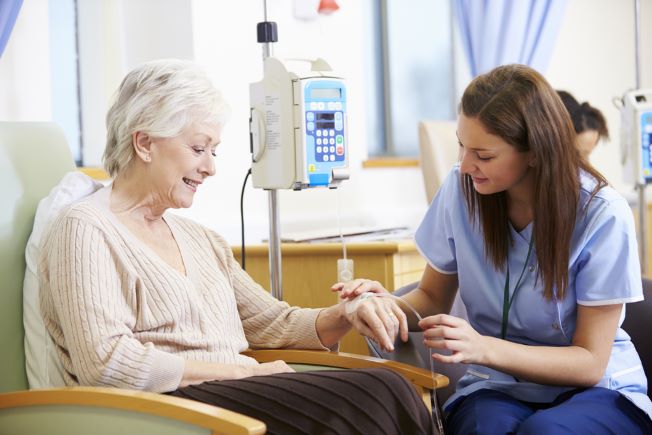
Chemotherapy is administered in several ways depending on the drug and the need. Most commonly chemo is given as an intravenously (through a vein). This infusion can happen through an IV line which may be temporarily placed, or through a central line port that stays in for a long period of time (usually several months). This option provides direct access to a vein though an implanted access device. There are also chemotherapy agents that can be taken orally, like a pill, or as an injection.
Chemotherapy is given in cycles. At the start of treatment, a protocol will describe the number of “rounds” of chemo that are anticipated. Chemo is typically administered every few weeks. A single infusion dose may last from minutes to hours over a day. A round of chemo may require up to several days of treatments. Once a round is complete, there is a break of a few weeks for the body to recover while the chemo is working on eliminating cancer from the body.
How are side effects managed?
Oncology and hematology teams are very knowledgeable about the side effects a specific chemotherapy may result in. As such they strive to be proactive preventing as much discomfort as possible. Typically medicines are given alongside chemo to limit feelings of nausea and other negative effects. These may include:
- Antiemetics: These drugs help prevent nausea and vomiting.
- Steroids: These can help reduce inflammation (as well as feelings of nausea).
- Antidiarrheals and/or Laxatives: Chemo can lead to changes with bowel habits so medicine to prevent issues are often given as a preventive measure.
What happens after chemo?
After each round of chemo, patients are monitored through bloodwork. Chemo makes a person immune-compromised and blood tests show to what degree. This must resolve prior to any further chemo treatment. After a round of chemo, patients are encouraged to limit their contact with others while their immune systems are low given the increased risk for infection. A patient who develops a fever between rounds will likely need to be seen by a doctor to make sure there is not an infection present. During this time a patient may be given medicine known as a colony-stimulating factor. This helps to encourage neutrophil (white blood cell) production. These cells are key for helping to stave off infection.
Once all rounds of chemo are complete, the patient will be evaluated to understand if the treatments led to the desired outcome – to kill, control, or shrink cancerous cells. From here the treatment plan may go in several different directions: surgery, radiation, immunotherapy, or in the case of some blood cancers, a bone marrow transplant.
Chemotherapy is an important tool for cancer treatment. Clinical research continues to look at ways to reduce the side effects of chemo as well as how different chemotherapies may be combined in order to increase overall effectiveness. If you have questions about chemo, be sure to talk to your care team who can also give recommendations for how to prepare for the treatment.
Published Date December 09, 2024
Latest News


Asthma
When the leaves change, so can asthma
Asthma symptoms often worsen during the fall leading to increased flare-ups, a few small changes might help lessen this risk
2026-09-18T14:19:00Z

Melanoma
Could a personalized vaccine help keep melanoma from returning?
A new combination, personalized mRNA vaccine is one of the most promising developments in melanoma research in years
2026-09-01T19:37:00Z

Eczema
Self-care tips during eczema flare-ups
Eczema can be emotionally draining and physically uncomfortable - learn how self-care may help change your outlook
2026-08-17T13:50:00Z

Heart Disease
Genetics and Heart Disease: understanding personal risk
As the scientific community learns more about genetic variants, links to disease onset become clearer
2026-08-04T18:13:00Z

Inflammatory Bowel Disease (IBD)
Diet and IBD: eat this, not that
Making lifestyle changes, especially dietary changes, can help limit or lessen flare-ups of IBD
2026-07-20T19:56:00Z
Healthy Volunteers
What is a Phase 1 trial?
Phase 1 trials are necessary first steps on the road to clinical breakthroughs and healthy volunteers can help make these a reality.
2026-07-06T18:34:00Z


Hypertension
Home-based exercise tips for blood pressure control
Getting heart-healthy physical activity doesn't have to mean running a marathon or joining an expensive gym.
2026-06-24T18:38:00Z

Obesity
The basics of BMI
BMI, or Body Mass Index, is a standard way to assess weight status - learn why and where it came from
2026-06-18T20:31:00Z

Lupus
Celebrities are using their voice to educate about lupus
<span style="line-height: 115%;">Several musically talented celebrities have brought lupus into the public eye by sharing their personal journeys</span>
2026-06-08T19:26:00Z
Asthma
Tips for dealing with changes to asthma management
<p>Policy changes to medication coverage may increasingly involve inhalers</p>
2026-06-02T12:55:00Z

Menopause
Approaches for dealing with thinning hair
<span style="line-height: 115%;">Hair thinning is one of the most emotionally challenging changes many women experience during menopause</span>
2026-05-22T14:09:00Z
Prostate Cancer
2026 brings new developments in prostate cancer treatment
Several exciting breakthroughs are helping reshape how prostate cancer is detected and treated
2026-05-21T12:32:00Z

Menopause
Supplemental estrogen: pills, patches, and modern options
Understanding the different forms of estrogen, including pills and patches, helps women have more informed conversations with their doctors
2026-05-20T19:17:00Z
Hives
How did urticaria get its name?
Hint: it has something to do with stinging nettles plants...
2026-05-14T14:06:00Z
Melanoma
Melanoma: Separating Myths from Facts
Melanoma can be a serious form of skin cancer - who is at risk and what are smart sun behaviors?
2026-05-05T18:44:00Z

Hypertension
Four foods linked with lower blood pressure
While the foods you eat can raise the risk of developing hypertension, there are also options that can help lower blood pressure.
2026-04-27T14:46:00Z

Healthy Volunteers
Common misconceptions about clinical research
Since many people have never participated in a clinical trial, it can be hard to separate fact from myth - here are some common trial myths, debunked.
2026-04-16T17:04:00Z

Colorectal Cancer
Why is Colorectal Cancer striking at younger ages?
The number of people being diagnosed with colorectal cancer under the age of 50 has greatly increased - what might be the cause of this troubling trend?
2026-03-19T14:02:00Z

Metabolic dysfunction-associated steatohepatitis (MASH)
Making lifestyle changes: ten ideas to get started
Losing excess weight together with an active lifestyle helps with the management of MASH, but where to begin?
2026-03-04T21:19:00Z
Eczema
Atopic Dermatitis: signs and stages
Understanding how atopic dermatitis looks, feels and changes during a flare-up is helpful to patients seeking greater control of their condition
2026-02-26T15:07:00Z

Multiple Myeloma
Understanding eligibility criteria for clinical research studies
Clinical trials utilize sets of criteria to determine if a person is a good fit - but what are these and what do they mean?
2026-02-18T17:46:00Z

Melanoma
With melanoma is on the rise, research delivers hope
Survival rates are rising thanks to transformative therapies that were unimaginable until recently
2026-02-02T20:39:00Z
Healthy Volunteers
The Protein Boom: a clear trend of 2026 emerges early
<span style="line-height: 107%;">Restaurants, snack brands and consumers all seem to be doubling down on protein</span>
2026-01-20T21:02:00Z

Eczema
Winter and eczema flares: How to reduce and cope
<span style="line-height: 107%;">A few strategies that may help better protect affected skin for a more enjoyable winter </span>
2025-12-15T17:16:00Z

Alzheimer's Disease
Preventing falls at home
Falling can lead to serious health issues in older adults, especially in those with dementia - here are some steps to reduce this risk
2025-11-20T17:56:00Z

Obesity
GLP-1 usage surges in US
Revolutionary medicines appear to usher in new hope, helping people overcome obesity
2025-11-06T20:58:00Z
Inflammatory Bowel Disease (IBD)
Ulcerative Colitis vs. Crohn’s Disease - what's the difference?
IBD comes in two primary forms with similar, unpleasant symptoms, but different management and treatment approaches
2025-10-28T16:55:00Z

Hypertension
Smartwatches getting smarter for better heart health
Smartwatches advance through innovation to identify risk of high blood pressure
2025-09-22T20:46:00Z
Metabolic dysfunction-associated steatohepatitis (MASH)
From NASH to MASH: a meaningful name change
What's in a name? A lot when it comes to engaging patients in care options
2025-09-09T12:19:00Z

Heart Disease
GLP-1: more than a weight loss drug
GLP-1 medicines may be an exciting new frontier for heart disease treatment
2025-08-26T15:35:00Z
Diabetes
Participating in clinical research from your home
A DCT brings cutting-edge research fueled by digital innovation straight into a person's home for utmost convenience
2025-08-05T17:23:00Z

Non-Hodgkin Lymphoma
How dogs are helping advance lymphoma research
Dogs are furry and faithful companions that too can face cancer - learn how some are benefiting from medical research
2025-05-28T17:36:00Z
Melanoma
Advances in Melanoma Treatment
Clinical research is helping bring new, and much-needed, treatments to market
2025-04-15T21:17:00Z
Asthma
New thinking in childhood asthma diagnosis approach
New studies show that over-calculating race risk in asthma diagnostic tools may actually delay diagnosis
2025-03-21T13:51:00Z

Alzheimer's Disease
As America ages, dementia diagnoses poised to double
With humans living longer due to medical breakthroughs, the chance of developing dementia has greatly increased
2025-02-19T13:56:00Z

Multiple Sclerosis (MS)
Is lassitude affecting your attitude?
The extreme fatigue of MS is so unrelenting that it has its own name: lassitude. What can you do to try and improve this feeling?
2025-01-24T18:58:00Z

Asthma
Breathing easy: the work of an asthma inhaler
Inhalers are lifechanging for people living with asthma and other breathing difficulties
2025-01-07T17:33:00Z
Leukemia (AML)
A simple guide to understanding chemo
Chemo is an effective cancer treatment - but what is it exactly and why does it work?
2024-12-09T14:25:00Z

Colorectal Cancer
The role of biomarker testing in cancer
Biomarkers can play important roles in cancer treatment, but what are they and what can they tell doctors?
2024-10-16T18:18:00Z

Leukemia (AML)
What helps with nausea besides medicine?
Nausea is an unfortunate aspect of cancer treatment - what may help reduce this side effect?
2024-08-31T18:30:00Z

Obesity
A primer on GLP-1 receptor agonists for weight loss
An overview on select GLP-1 receptor agonist treatments that help promote blood sugar management and weight loss
2024-07-31T18:30:00Z